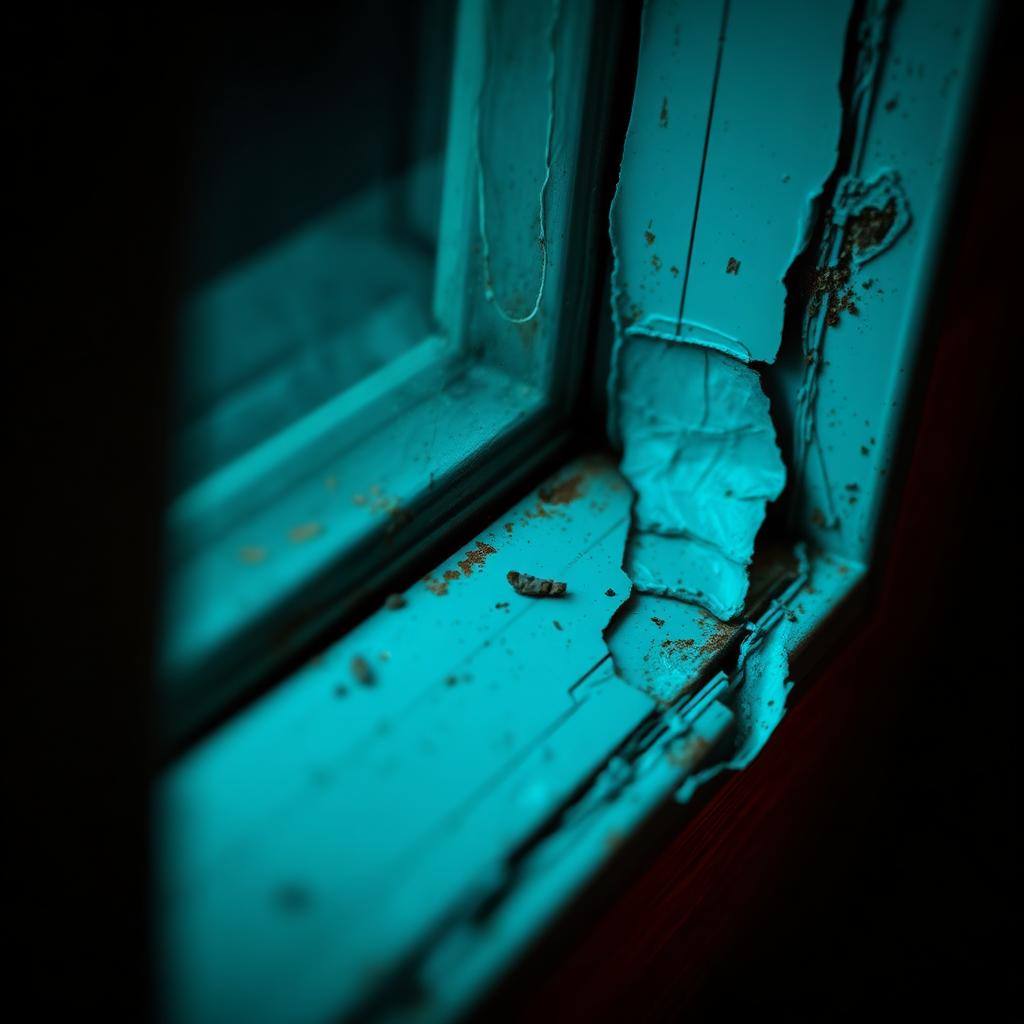
Your home's caulking doesn't last forever. Over time, joints deteriorate from sun, frost and moisture — and in Quebec, freeze-thaw cycles speed up the process. Here are the 5 signs to watch for, and what to do when you spot them. For context on the normal lifespan of caulking, see our dedicated article.
The 5 signs to watch for
1. Cracked or peeling joints
Look around your windows and doors. If the sealant is cracked, hardened, or pulling away from the frame, it's no longer doing its job. Note: a joint that looks 'just a bit dry' from a distance can be dead to the touch — test it with a screwdriver.
2. Drafts near windows
Run your hand along the frames on a cold day. If you feel cool air coming in, your seals are compromised. These infiltrations drive up your heating bill — up to 25% of a home's heat loss goes through air leaks, with doors and windows leading the pack.
3. Excessive condensation on glass
Fog that keeps returning on your windows indicates a sealing problem. Outside moisture seeps in and creates condensation, which can lead to mold — a far more expensive problem to remediate than the caulking itself.
4. Insects or small rodents getting in
Ants, spiders or even mice finding their way inside? Cracks in the caulking are often their entry point. A mouse can pass through a 6 mm hole — exactly the width of a standard caulking bead that has failed.
5. Mold traces around frames
Black or greenish stains near your windows are a red flag. Moisture infiltrates through failing caulking and creates an environment conducive to mold, harmful to your health (allergies, asthma, lung problems).
Why waiting costs more
Failing caulking isn't just cosmetic. It's the first step in an expensive cascade:
- Heating bill: air leaks can account for up to 25% of a home's heat loss.
- Insulation compromised: moisture entering the walls soaks the batting and kills its R-value — it doesn't dry out on its own.
- Mold and rot: at this stage, you're no longer redoing a joint but replacing a window.
- Pests: a mouse or carpenter ant colony costs more to remove than to keep out.
What to do if you spot a sign
One sign doesn't mean redoing everything. Here's the approach we suggest to our clients in Brossard and across Greater Montreal:
- 1 isolated sign: spot repair is possible, provided neighbouring joints are still sound.
- 2-3 signs or more: plan a full recaulk of every opening — more effective and often cheaper overall.
- Visible mold or rotten frame: urgent — inspect the insulation behind the frame too.
To dig deeper into why these signs matter, read our article 8 reasons to replace old caulking. If you're getting your home ready for winter, our preparing for winter guide covers the complementary steps. For warranty, pricing or service-area questions: our FAQ.
Recognize one or more of these signs? Don't wait. Learn about our caulking service or request a free inspection.