
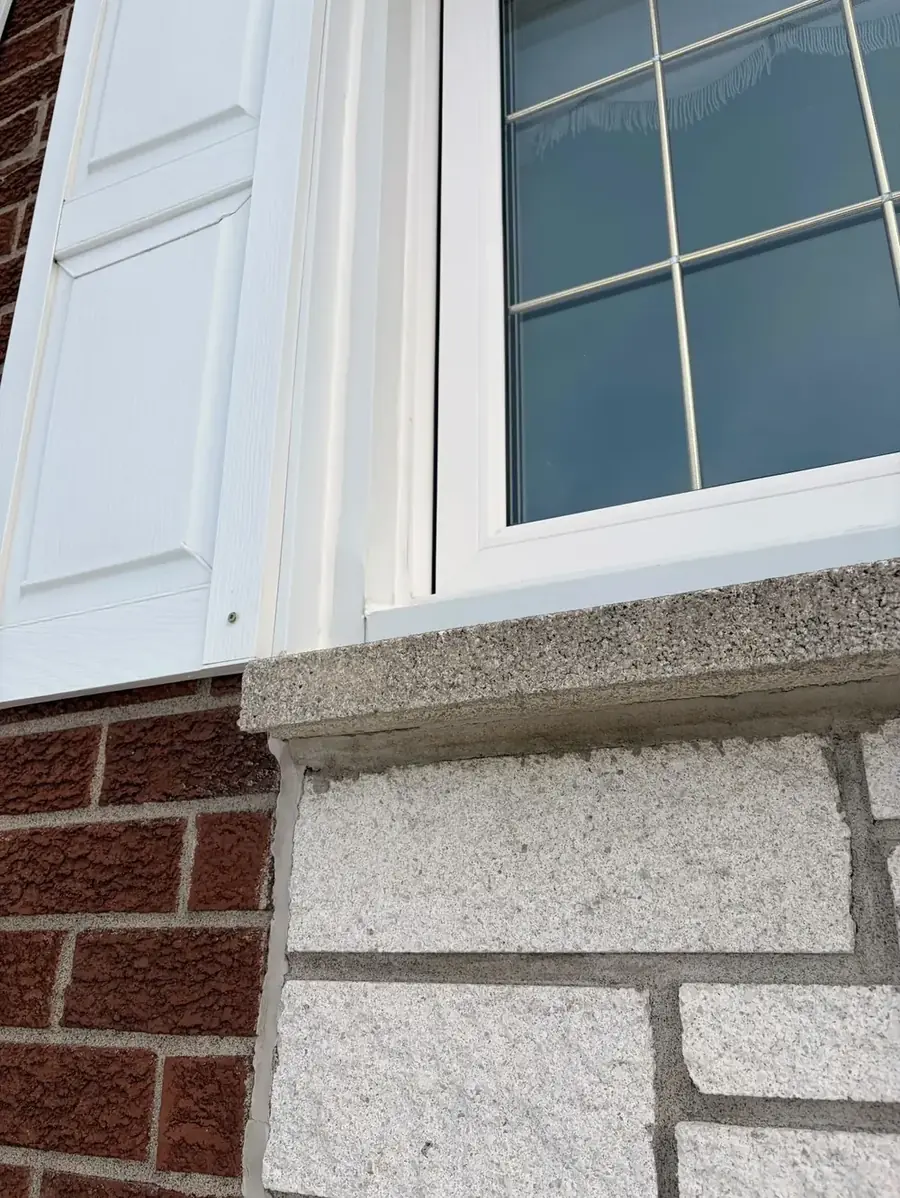
It depends on the sealant. Acrylic or latex can be painted once dry. Silicone cannot: paint won't stick to it and eventually peels off. Before picking up a brush, you need to know what's in your joints.
The answer depends on the sealant
- Acrylic or latex: paintable once dry. The label specifies the waiting time.
- Siliconized acrylic: despite its name, it's generally paintable. The label will confirm.
- Polyurethane and hybrid sealants: most can be painted once cured. Check the manufacturer's data sheet.
- Pure silicone: cannot be painted.
The rule is simple: if the label doesn't say "paintable," don't assume it will work.
Why paint won't stick to silicone
Once cured, silicone has a smooth surface that repels paint. Paint beads up, leaves patches or dries poorly. Even if it seems to stick at first, it eventually flakes off.
Silicone can also leave an invisible film on the surfaces around a joint. If old silicone was removed without thorough cleaning, paint may not adhere well to the frame itself.
Even paintable sealant moves
An exterior joint opens and closes as temperatures rise and fall. Sealant is designed to stretch. Paint is much less flexible. A thick coat over a moving joint can crack, even when the sealant underneath is intact.
If you paint a paintable sealant, apply a thin coat and avoid covering more of the joint than necessary.
How to identify the sealant in your joints
- Still have the tube or invoice? That's the most reliable way to know.
- Silicone feels rubbery and slightly slippery. Acrylic is harder and less elastic.
- Test a small, hidden section. If paint beads up or comes off easily once dry, it's probably silicone.
Peeling paint on a painted joint often means there's silicone underneath, or that the joint has moved too much.
What do we use at Protek?
We usually apply DOWSIL CWS silicone. It isn't paintable, and that's intentional: outdoors, silicone retains its flexibility and withstands the weather better than acrylic. Our article on silicone or polyurethane explains the differences, and how long DOWSIL CWS lasts explains what helps it last.
Want to paint your joints? We can apply DOWSIL Contractors Paintable Sealant instead, a Dow hybrid sealant designed to be painted. According to its technical data sheet, it accepts most paints once cured, and the manufacturer recommends testing before painting. It can be applied from 4.4 °C, on a dry, frost-free surface. In colder weather, we apply DOWSIL CWS. Mention it when you request your quote.
With DOWSIL CWS, the sealant colour needs to match the frame or siding.
Paint or caulk: which comes first?
If your joints will be silicone and you plan to repaint your frames or siding, paint first. Caulking comes afterwards, once the paint is thoroughly dry.
In the reverse order, the painter has to work around a fresh silicone joint. Paint that touches the joint won't hold and will leave an uneven line. Each joint will need to be masked with tape, which takes time.
If the caulking is already done and painting comes later, it's not a disaster. Mask the joint with tape and paint up to the edge without covering it.
With a paintable sealant like DOWSIL Contractors Paintable Sealant, the reverse also works: we caulk first, and you paint once the sealant has cured.
See our window caulking and Canexel caulking pages for details on these surfaces.
What not to do
- Paint an old, cracked joint to hide it. Paint doesn't seal a crack, and water keeps getting in.
- Apply a paintable sealant over old silicone. It won't adhere well. The old joint must be removed completely.
- Paint a sealant that isn't dry yet.
In short
- Acrylic and latex: yes, once dry.
- Polyurethane and hybrids: often, depending on the manufacturer's data sheet.
- Silicone: no. To paint, ask for a paintable sealant.
- Even paintable joints move: use only a thin coat of paint.
- Repainting with silicone joints? Paint first.
Do your joints need replacing before or after painting? The inspection and quote are free, and we respond within 24 h. Call us at 438-405-4195, or consult our caulking price guide.